Internal Tube Cutter Guide: Where to Cut Tubes During a Retube
Where to cut condenser and heat exchanger tubes in a retube: outside the tubesheet, inside the tube hole or at a support plate, and which internal cutter fits.
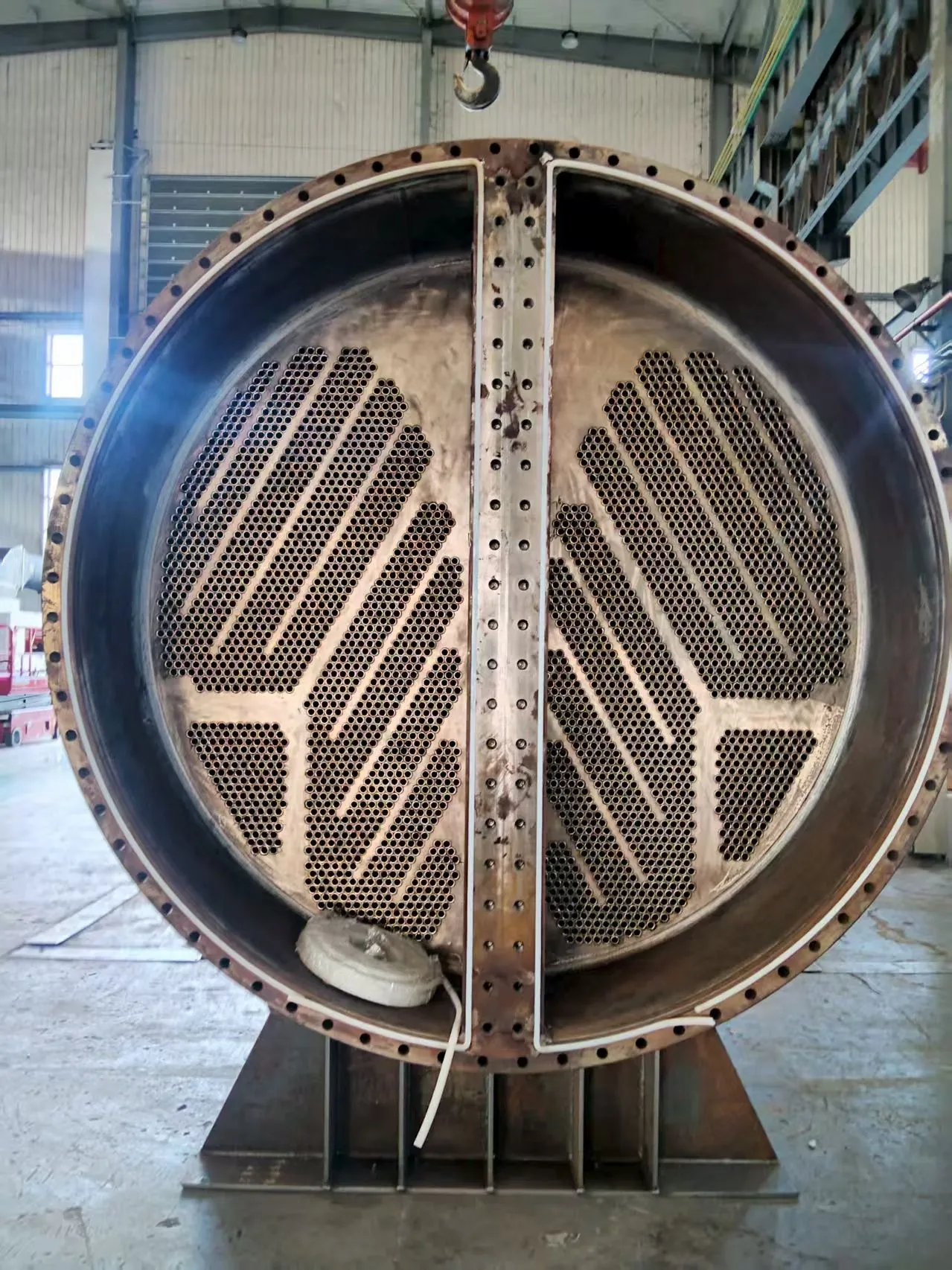
In a condenser or heat exchanger retube, the old tubes are held at each end by rolled or welded joints in the tubesheet, and often pass through several support plates (baffles) along the shell. Before a tube can be pulled out, it has to be cut so the joint section and the tube body can be separated. Where that cut is made decides how much force the pull needs, how much is left in the hole, and what risk there is to the tubesheet.
Lanbo internal tube cutters work from inside the tube, through the tubesheet face, and can be set to cut at three positions: outside the tubesheet, inside the tubesheet (within the tube hole), and at a support plate. This article explains each position and the cutter that fits it.
Why cut from the inside
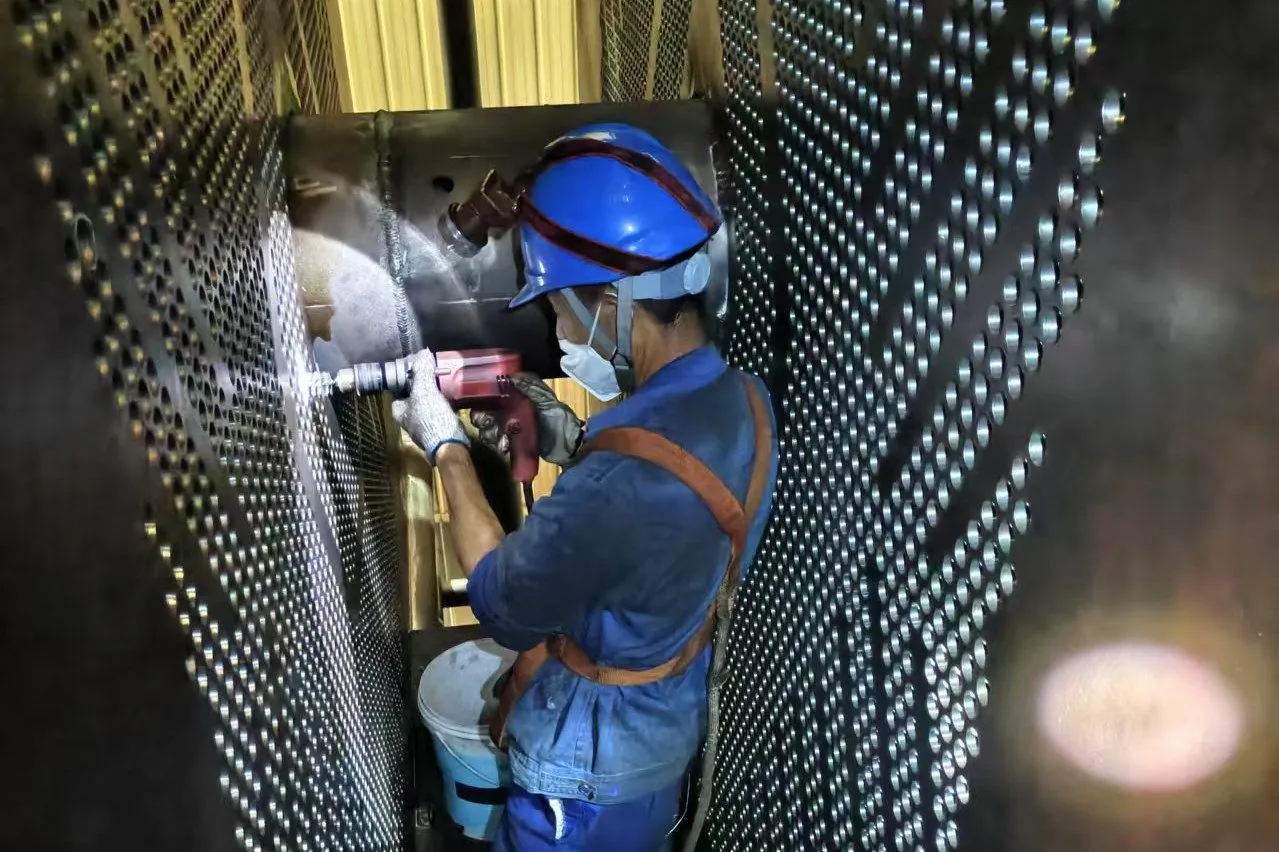
An internal cutter enters the tube from the open end and cuts the wall from the inside with a blade that feeds outward as it rotates. Nothing has to reach the shell side, and the tubesheet face and holes are not touched by the cutting action. The alternative some contractors use, flattening tubes with a collapsing tool on a demolition hammer, puts impact and vibration into the tube holes and welds, and that damage is usually irreversible.
Position 1: Outside the tubesheet
When to use it
Cutting just beyond the back face of the tubesheet, on the shell side, is a common position. The stub that remains in the hole is short, so it can be pulled with a hydraulic tube puller at moderate force, and the long tube body is free to be withdrawn once both ends are cut.
Which cutter
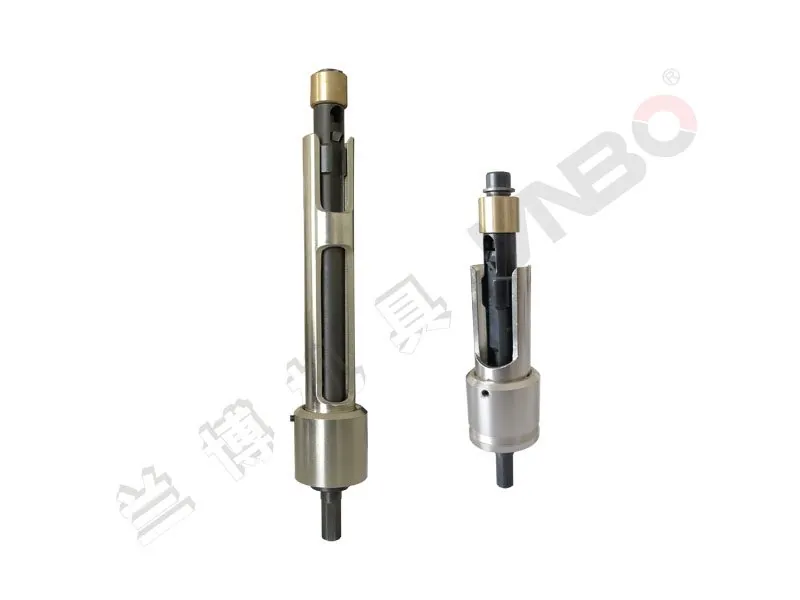
The DNQ-A Tube Cutter, Push Type is designed for this. It is driven by a tube roller, so a site already equipped for rolling usually has the drive. Published ratings:
- Tube OD φ12–φ38 mm, wall 0.3–2 mm
- Tube materials: copper, aluminium, titanium, stainless
- Standard cutting depth 70 mm; other depths and long-reach versions up to 5000 mm made to order
- Weight 0.5–1.2 kg (long-reach 1–1.5 kg)
The cut position is set by the cutting depth. Give us the tubesheet thickness and we will match the depth so the cut falls just outside the back face.
Position 2: Inside the tubesheet
When to use it
Cutting within the tube hole, inside the tubesheet thickness, separates the tube body from the joint inside the hole itself. This is used where the shell side behind the tubesheet is not the place you want the cut, for example when the joint section is to be removed as a short ring from the face side, or when the tube body will be drawn out from the opposite end. The remaining ring in the hole is short and can then be collapsed and knocked out in a controlled way with a tube collapsing tool and tube knockout tool, or pulled.
Which cutter
The cutter and its setting for this position depend on the tubesheet thickness, any cladding, and the tube size and material. Send us these details and we confirm which cutter to use and how to set it. A trial cut on a tube scheduled for removal is recommended before production cutting.
Position 3: At a support plate
When to use it
On long condenser tubes or where a tube has to be removed in sections, the tube is cut at an intermediate support plate. This is also the position used when a damaged length near a support plate must be separated.
Which cutter
The DNQ-B Internal Tube Cutter cuts inside the tube at the support plate and is used together with a tube puller. It shares the DNQ-A ranges: tube OD φ12–φ38 mm, wall 0.3–2 mm, copper, aluminium, titanium and stainless. Support plates can be far from the tubesheet face, so long-reach versions up to 5000 mm are made to order. Pulling is done with a hydraulic puller such as the YKB-4 (6200 kgf, φ12–φ28 mm).
Small tubes
For small-bore tubes, the QTC Pneumatic Small-Tube Cutter covers tube OD φ7–φ25.4 mm with wall up to 1.5 mm. It is air-driven and weighs 2.0 kg.
Trimming belongs to cutting too
After new tubes are rolled or welded, the tube ends often have to be cut back or faced to the projection on the drawing. That work uses facing tools such as the GXD-A / GXD-B, the J1P-Z-1 and the GPK-38-1. See our separate article on tube end facing.
Quick reference
| Cut position | Typical purpose | Lanbo cutter |
|---|---|---|
| Outside the tubesheet | Short stub, then pull | DNQ-A (driven by tube roller) |
| Inside the tubesheet | Separate at the joint inside the hole | Ask us; we confirm the cutter for your tubesheet |
| At support plate | Remove in sections, long tubes | DNQ-B with tube puller; long-reach to 5000 mm |
| Small tubes | φ7–φ25.4 mm | QTC pneumatic |
Lanbo tools for this job
- DNQ-A Tube Cutter, Push Type
- DNQ-B Internal Tube Cutter
- DNQ-C Power-Feed Tube Cutter
- QTC Pneumatic Small-Tube Cutter
- YKB-4 Hydraulic Tube Puller
- Tube Collapsing Tool and Tube Knockout Tool
To get a cutter matched to your unit, send us the tube material, OD × wall thickness, tube count, tubesheet thickness and the distance to the support plates. Request a quote.
FAQ
What drives the DNQ-A cutter?
The DNQ-A is driven by a tube roller. Many retube crews already have one on site for rolling the new tubes.
Can the DNQ cutters cut carbon steel tubes?
The published materials for DNQ-A and DNQ-B are copper, aluminium, titanium and stainless. For carbon steel tubes, send us the size and wall and we will confirm whether a suitable cutter is available.
How far into the tube can the cutter reach?
Standard cutting depth is 70 mm. Long-reach versions up to 5000 mm are made to order, for example to reach support plates.
Will cutting inside the tubesheet damage the hole?
The blade is set to cut through the tube wall. The depth and blade setting should be checked on a trial tube so the cut stops at the tube wall; tubesheet thickness and cladding need to be known before setting.