Long-Reach Internal Tube Cutter and Small-Tube Cutting Guide
Cutting tubes deep in a bundle at support plates up to 5000 mm with long-reach DNQ internal cutters, and cutting small tubes φ7–φ25.4 mm with the QTC cutter.
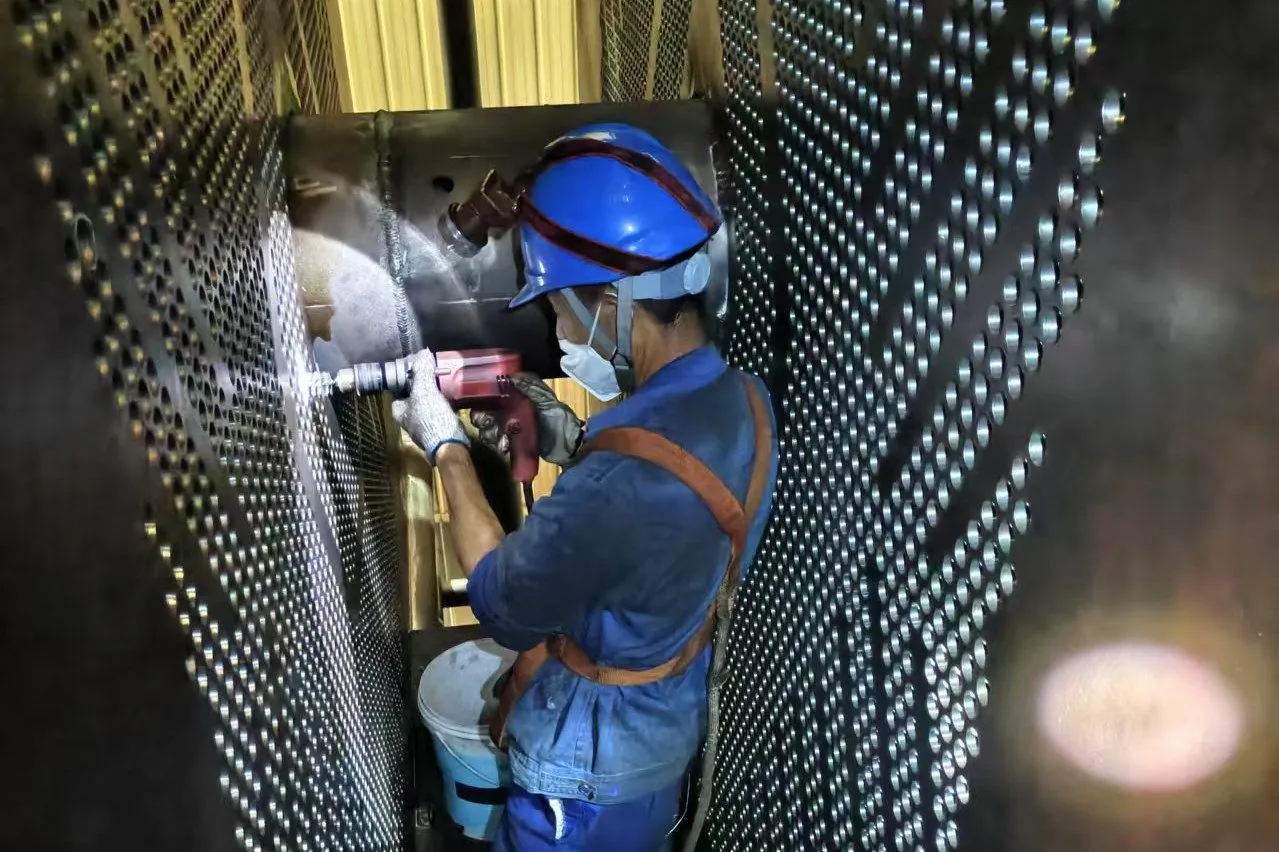
Two tube cutting jobs come up regularly in retube and repair work and need different tools from the standard short cut behind the tubesheet. One is cutting deep inside the bundle, at a support plate or baffle that may be several metres from the tubesheet face. The other is cutting small-bore tubes, where there is little room inside the tube for a cutter head.
This article covers both: Lanbo's long-reach DNQ internal cutters, made to order up to 5000 mm, and the QTC pneumatic small-tube cutter.
Part 1: Long-reach internal cutting
When you need a long reach
A standard internal cutter has a cutting depth of 70 mm from the tubesheet face, which is enough to cut just behind the tubesheet. Longer reach is needed when:
- A tube has to be cut at an intermediate support plate, for example to remove a long condenser tube in sections.
- A damaged length near a support plate has to be separated from the rest of the tube.
- The tube has to be cut beyond a thick tubesheet or an obstruction behind it.
Which cutter
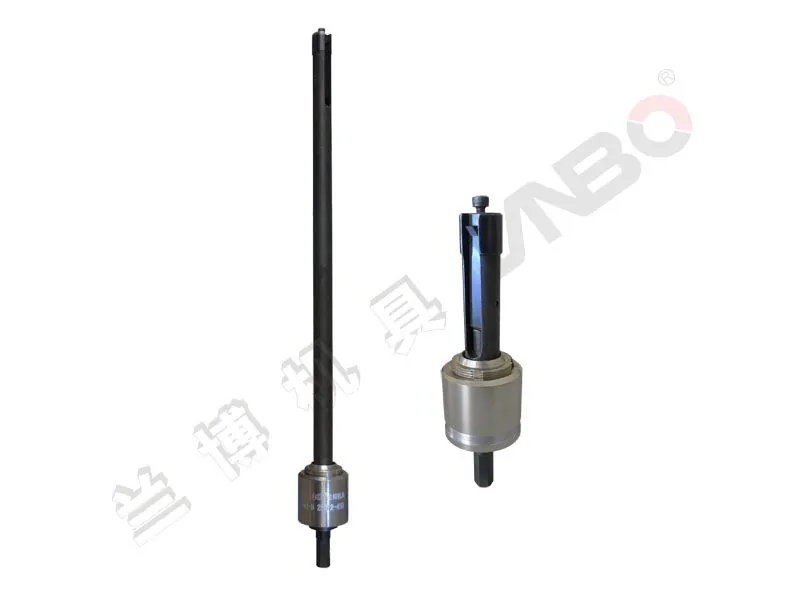
Both the DNQ-A Tube Cutter, Push Type and the DNQ-B Internal Tube Cutter are available in long-reach versions up to 5000 mm, made to order. The DNQ-A cuts inside the tube outside the tubesheet and is driven by a tube roller; the DNQ-B cuts at the support plate and is used with a tube puller. Published ratings for both:
- Tube OD φ12–φ38 mm, wall 0.3–2 mm
- Tube materials: copper, aluminium, titanium, stainless
- Weight 0.5–1.2 kg standard; long-reach versions 1–1.5 kg
Information we need for a long-reach cutter
Because long-reach cutters are made to order, the cutter is built around the unit. Send:
- Tube material, OD and wall thickness
- Tubesheet thickness
- Distance from the tubesheet face to each support plate where you need to cut
- Support plate thickness
- Whether the tube is straight at that point, and any known deposits or deformation
Working with long-reach cutters
- Locate the cut accurately. The cut should fall where you intend it, usually at or next to the support plate. Mark the reach on the shaft and check it against the drawing.
- Keep the shaft supported. A long shaft can whip or bend if it is driven too fast or unsupported at the entry. Feed it steadily and use a guide at the tubesheet face where possible.
- Check the cut. After cutting, confirm the tube is free before pulling. A partial cut adds load during pulling.
- Pull the sections. After cutting at the support plate with a DNQ-B, the tube section is pulled with a hydraulic puller such as the YKB-5 (6200 kgf, φ16–φ28 mm).
The same reach question applies to rolling: when new tubes have to be rolled at support plates, the LH Series Expander has a maximum reach of 5 m.
Part 2: Small-tube cutting
The problem with small bores
On tubes below about φ12 mm OD, there is little room inside for a cutter head and blade, and the tubes are often thin-walled. A cutter has to fit the bore, cut cleanly through the wall and not crush the tube.
QTC pneumatic small-tube cutter
The QTC Pneumatic Small-Tube Cutter covers:
- Tube OD φ7–φ25.4 mm
- Tube wall up to 1.5 mm
- Weight 2.0 kg
- Air drive
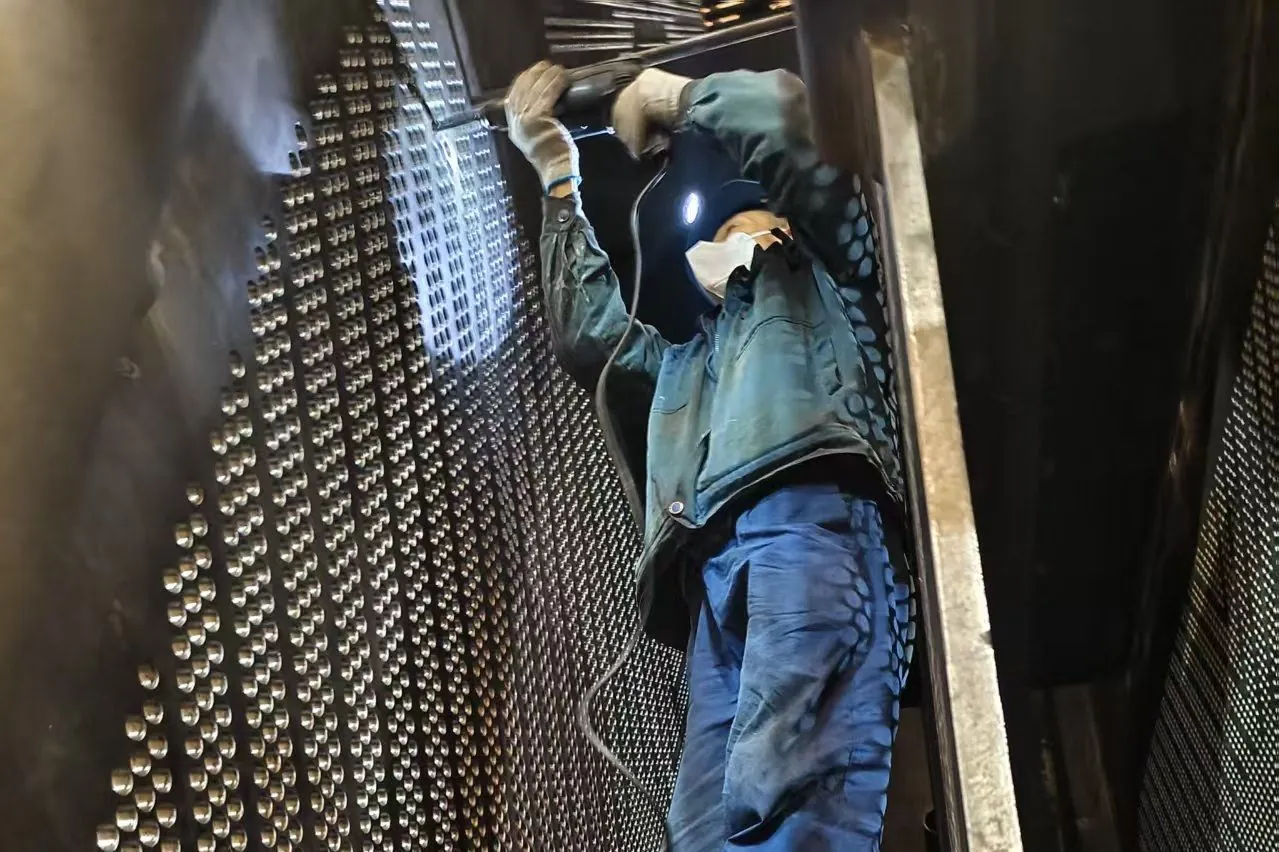
It suits small exchangers, coolers and other units with small-bore tubes, where the DNQ range (from φ12 mm) does not reach the smaller sizes. Air drive is also convenient on sites where compressed air is the normal tool supply.
Pulling small tubes after cutting
Small tubes are usually pulled with a manual or small hydraulic puller. The LSB-2 Manual Tube Puller covers φ12–φ32 mm, and the screw-type tube puller head covers tube OD from φ7.94 mm, wall 0.4–2.5 mm (BWG 13–27).
Avoiding damage
Whatever the tube size, cut the tube and then pull it. Hammering tubes out with a collapsing tool on a demolition hammer can damage tube holes and tube-to-tubesheet welds, and that damage is usually irreversible. Collapsing and knockout tools are for short stubs, used in a controlled way.
Lanbo tools for this job
- DNQ-A Tube Cutter, Push Type — long-reach to 5000 mm, made to order
- DNQ-B Internal Tube Cutter — cuts at the support plate, long-reach to 5000 mm
- DNQ-C Power-Feed Tube Cutter
- QTC Pneumatic Small-Tube Cutter — φ7–φ25.4 mm
- YKB-5 Hydraulic Tube Puller, Collet Type
- LSB-2 Manual Tube Puller
- LH Series Expander — rolling at support plates, reach 5 m
For a long-reach or small-tube cutter, send us the tube material, OD × wall thickness, tube count and, for long reach, the distance from the tubesheet face to each cut position. Request a quote.
FAQ
How much reach is available?
Long-reach DNQ cutters are made to order up to 5000 mm.
Does a long-reach cutter weigh much more?
Published weights are 0.5–1.2 kg for standard versions and 1–1.5 kg for long-reach versions.
What is the smallest tube the QTC can cut?
The QTC covers tube OD from φ7 mm up to φ25.4 mm, with wall up to 1.5 mm.
Can the QTC cut titanium?
The published ratings for the QTC give tube OD and wall range but do not list materials. Send us the material and size and we will confirm.
How long does a long-reach cutter take to make?
It depends on the reach and tube size. We will give a delivery time with the quotation.