Tube End Facing After Rolling or Welding: Projection Control
How to trim and face tube ends to the specified projection after rolling or welding, and how to choose between GXD-A/GXD-B, J1P-Z-1 and GPK-38-1 facing tools.
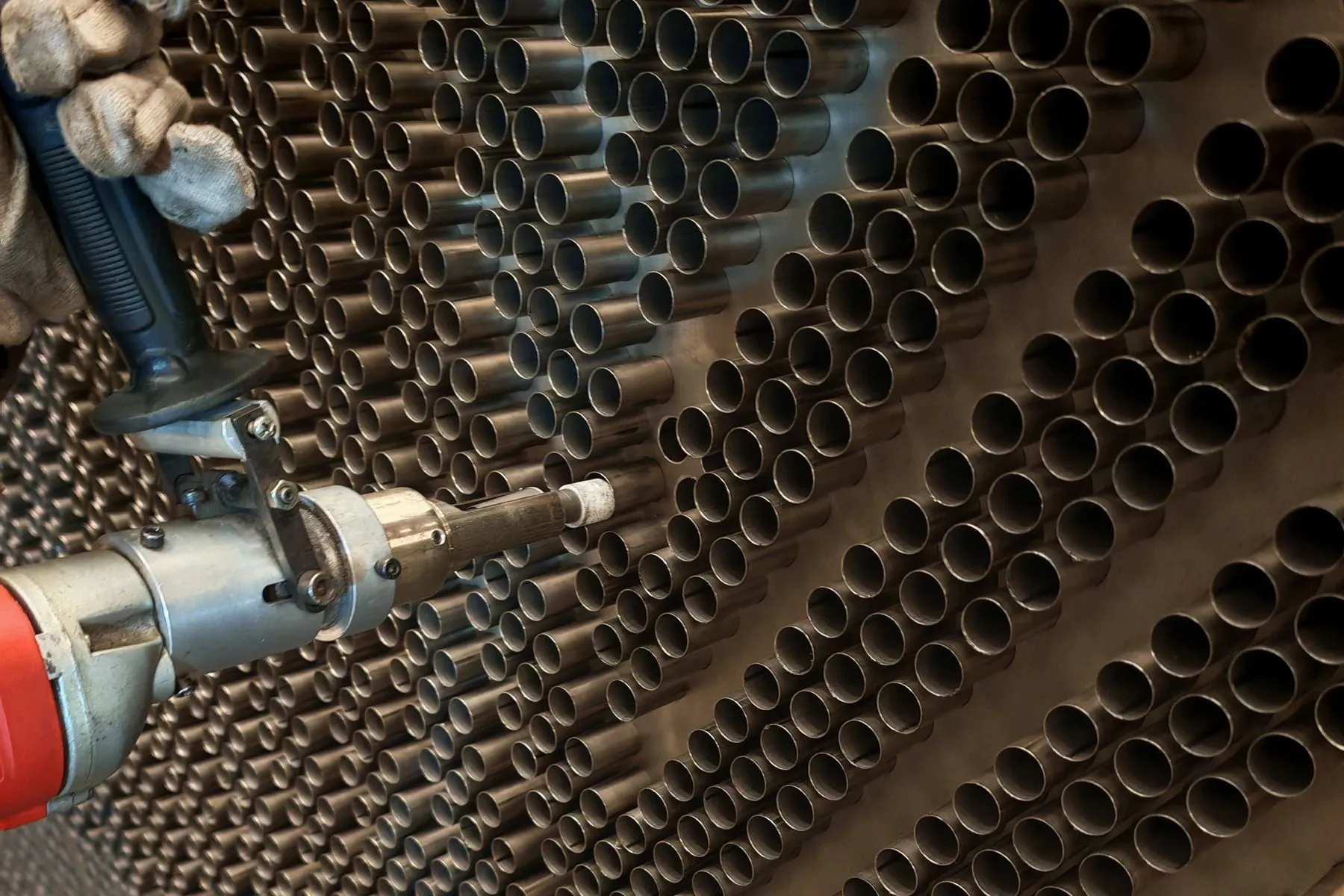
When new tubes are installed in a heat exchanger or condenser, they are usually inserted with some extra length at each end. After rolling, or before and after welding, the ends are cut back and faced so that every tube projects from the tubesheet by the amount specified on the drawing or the welding procedure. This is tube end trimming, or tube end facing, and on tube-cutters.com we treat it as part of tube cutting.
This article covers why projection matters, the usual sequence on rolled and welded joints, and which Lanbo facing tool fits which job.
Why projection control matters
For rolled joints
On joints that are rolled but not welded, the tube end is often specified flush with the tubesheet face or with a small projection. Uneven tube ends make the waterbox face harder to inspect, can disturb flow at the inlet, and can catch cleaning tools. A faced, square end also makes it easier to see whether the tube has been rolled across its full length.
For welded joints
On tube-to-tubesheet welds, the projection is part of the weld design. The welding procedure specifies how far the tube stands above the tubesheet face, because that length affects how the tube end melts into the joint. If projections vary from tube to tube, the weld profile and penetration vary too. An orbital welder such as the WZM1-200B repeats the same programme on every joint, so it relies on consistent tube projection.
For appearance and records
Even, square tube ends give a clean tubesheet that is easier to inspect, photograph and record in the job file.
Typical sequence
The exact sequence follows the drawing and the welding procedure for the unit. A common pattern is:
- Insert the tube with extra length beyond the tubesheet face.
- Roll the tube (for rolled joints, or a light tack roll before welding where specified).
- Face the tube end to the specified projection.
- Weld, if the joint is welded.
- Final roll where the procedure calls for it, then inspect.
On some welded designs the tube end is also bevelled before welding. The GPK-38-1 does facing and bevelling.
Choosing a facing tool
GXD-A / GXD-B tube end facing tools
The GXD-A / GXD-B are compact facing tools driven by a drill. Published ratings:
- Tube OD Φ12–Φ57 mm, wall 0.5–2.5 mm
- Tube materials: copper, titanium, stainless
- Sleeve adjustment 20 mm, used to set the projection
- Weight 0.2–0.4 kg
- Drive: for copper tubes up to Φ32, a standard 13 mm drill; for titanium, stainless and carbon steel, a 200 rpm low-speed electric or air drill
They suit large tube counts where a light tool and a common drill drive are practical. The sleeve sets the depth, so once it is adjusted to the required projection, each tube is faced to the same length.

J1P-Z-1 tube end facing machine
The J1P-Z-1 is a dedicated facing machine for tube OD Φ16, Φ19, Φ25 and Φ28 mm, wall 0.5–2.5 mm, weighing 3.5 kg. It suits jobs on these common condenser and exchanger sizes where a dedicated machine for fixed sizes is preferred over a drill-driven tool.
GPK-38-1 tube end facing and bevelling machine
The GPK-38-1 handles tube OD Φ14–Φ40 mm with wall up to 3.5 mm, weighing 9 kg. It faces and bevels, so it fits heavier-wall tubes and weld preparations where a bevel is specified.
GXD-C
The GXD-C Tube End Facing Machine is another option in the range; contact us with your tube size for its fit.
Quick comparison
| Tool | Tube OD | Wall | Weight | Notes |
|---|---|---|---|---|
| GXD-A / GXD-B | Φ12–Φ57 mm | 0.5–2.5 mm | 0.2–0.4 kg | Drill-driven, 20 mm sleeve adjustment |
| J1P-Z-1 | Φ16 / 19 / 25 / 28 mm | 0.5–2.5 mm | 3.5 kg | Dedicated facing machine |
| GPK-38-1 | Φ14–Φ40 mm | ≤ 3.5 mm | 9 kg | Facing and bevelling |
Practical points
- Set the projection on a trial tube, measure it, then lock the setting before production.
- Check projection on a sample of tubes across the tubesheet during the job as well as at the start.
- Use the drive speed that suits the material: harder materials such as titanium and stainless usually need low speed.
- Remove chips from the tube bore and tubesheet face before welding or final rolling.
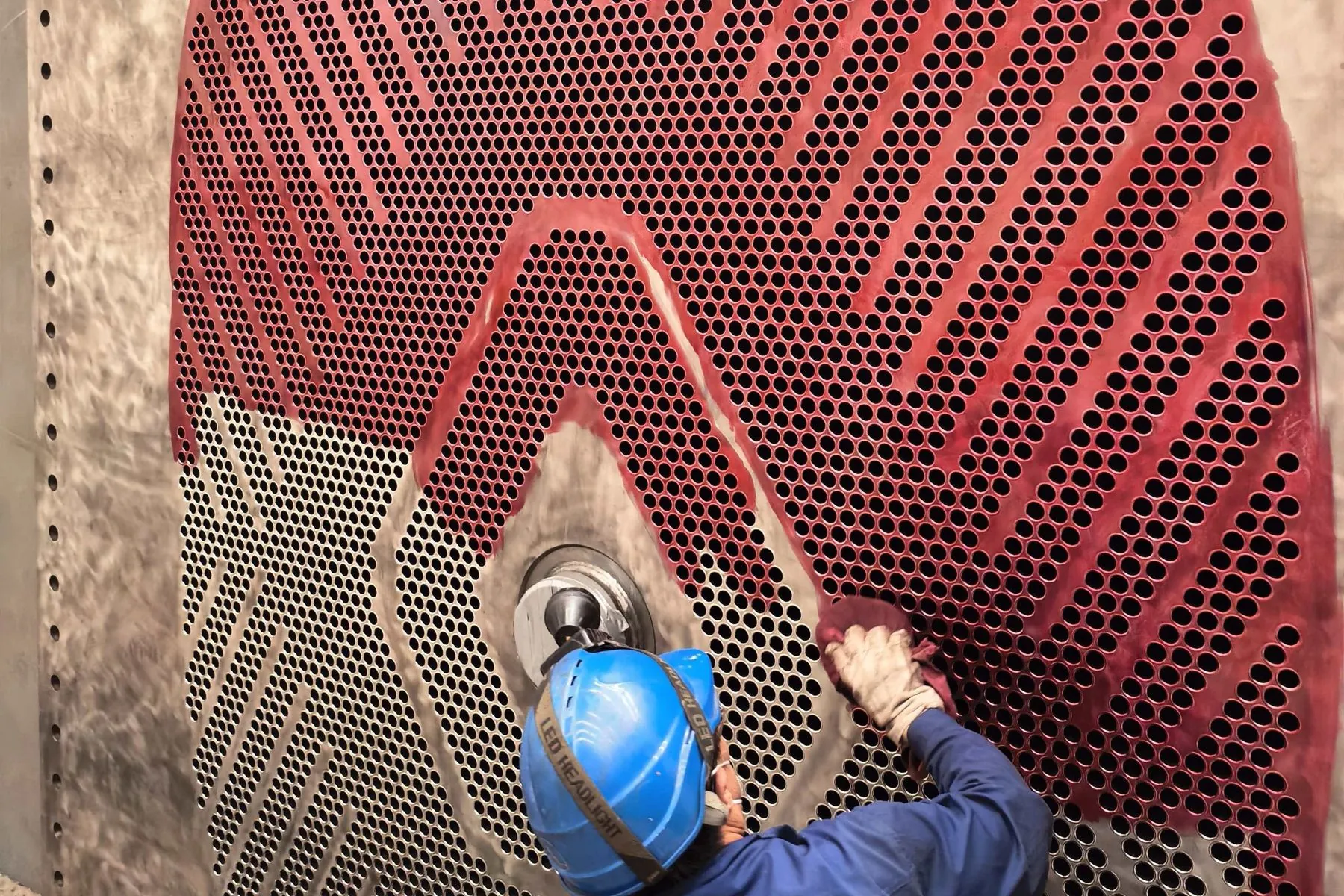
- Before welding, clean the tube end and the tubesheet around it; contamination affects weld quality.
Lanbo tools for this job
- GXD-A / GXD-B Tube End Facing Tools
- J1P-Z-1 Tube End Facing Machine
- GPK-38-1 Tube End Facing and Beveling Machine
- GXD-C Tube End Facing Machine
- TPG-1 Electric Tube End Polisher — for cleaning tube ends before welding
- WZM1-200B Orbital TIG Welder
To choose a facing tool, send us the tube material, OD × wall thickness, tube count and the required projection from your drawing or welding procedure. Request a quote.
FAQ
What projection should I use?
Use the value on the equipment drawing or in the welding procedure for the unit. It depends on the joint design and welding process, so we do not give a general figure.
Can I use an ordinary drill with the GXD tools?
For copper tubes up to Φ32 mm, a standard 13 mm drill is used. For titanium, stainless and carbon steel, use a 200 rpm low-speed electric or air drill.
Do I face before or after welding?
Usually before welding, so the weld is made on a tube end at the specified projection. Follow the sequence in your welding procedure.
Which tool for thick-wall tubes?
The GPK-38-1 covers wall up to 3.5 mm and can also bevel. The GXD-A / GXD-B and J1P-Z-1 cover wall 0.5–2.5 mm.